
What to Do After Storm Damage: A Homeowner's Guide
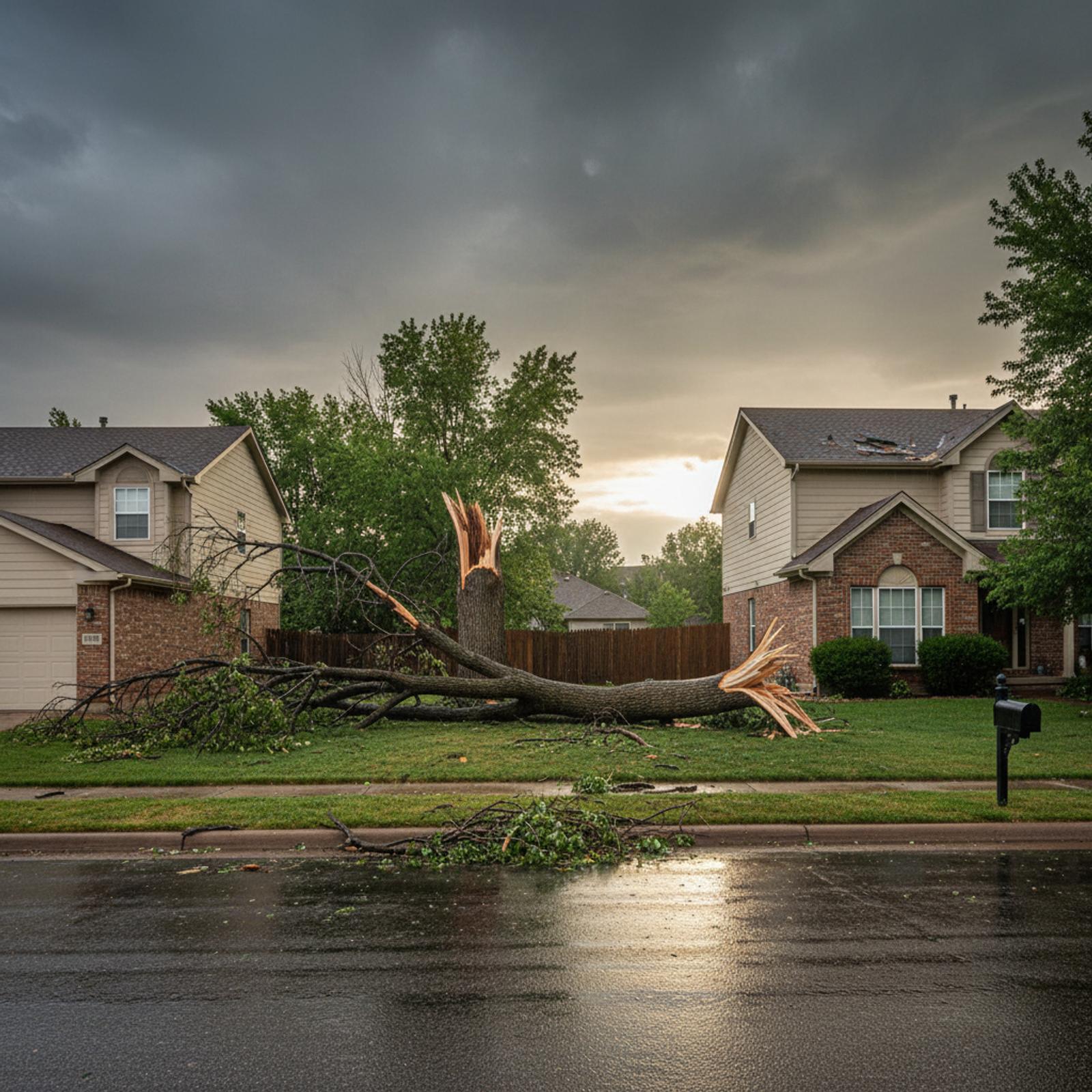
Colorado storms don’t mess around. Whether it’s a late spring snow dump that snaps limbs under heavy, wet weight, a summer hailstorm that shreds canopies, or a fall windstorm that topples weakened trees, storm damage to trees is a regular reality for South Denver homeowners.
When you walk outside after a storm and see broken branches, split trunks, or a tree leaning where it shouldn’t be, here’s what to do — and what not to do.
First Priority: Safety
Before you do anything else, assess the safety of the situation:
Stay Away From Downed Power Lines
If a tree or branch has fallen on or near power lines, stay at least 50 feet away and call your utility provider (Xcel Energy: 1-800-895-1999). Do not attempt to move the branch or tree yourself. Even if the line looks dead, it may still be energized.
Watch for Hanging Branches
Look up before you walk under any damaged tree. “Widow makers” — broken branches caught in the canopy — are extremely dangerous. They can fall without warning, especially in wind. Stay clear of any tree with visible hanging debris.
Check for Structural Damage
If a tree has fallen on your home, garage, fence, or vehicle:
- Do not enter a structure that may be structurally compromised
- Document the damage with photos for your insurance claim
- Call your insurance company to start the claims process
- Call a professional tree service to handle removal
Keep Kids and Pets Away
Storm-damaged trees are unpredictable. Keep everyone at a safe distance until the situation has been assessed and addressed.
What You Can Safely Handle Yourself
Some minor storm damage is safe for homeowners to address:
- Small branches on the ground (under 3 inches diameter) can be cut up and removed
- Leaves and small debris scattered across the yard can be raked and bagged
- Light cleanup of non-hazardous ground-level debris
What Requires a Professional
Call a professional storm damage repair service for:
- Any branch still attached to the tree — these can be under tension and spring unpredictably when cut
- Branches larger than 3-4 inches in diameter
- Split trunks or major structural damage to the tree
- Trees leaning or partially uprooted — these are extremely heavy and dangerous
- Anything near power lines, structures, or fences
- Work that requires climbing or chainsaws above ground level
This isn’t about being overly cautious — storm-damaged trees are one of the most dangerous situations in tree care. Tension-loaded limbs can release with lethal force when cut. Partially uprooted trees can shift and fall without warning. Leave this work to someone with the training and equipment to handle it safely.
Step-by-Step: After the Storm
1. Document Everything
Take photos of all damage before any cleanup begins. This is essential for insurance claims. Photograph:
- Damaged trees from multiple angles
- Any damage to structures, vehicles, fences, or landscaping
- The overall scope of the damage across your property
2. Contact Your Insurance Company
Most homeowner policies cover tree removal when:
- A tree has fallen on an insured structure (home, garage, shed)
- A tree is blocking a driveway or access point
- A tree has damaged a vehicle (typically covered under auto comprehensive)
Tree removal for trees that fell in the yard but didn’t hit anything is often not covered. Check your specific policy.
3. Call a Tree Service — But Be Careful
After major storms, demand for tree work surges. This brings out storm chasers — unlicensed, uninsured operators who go door to door soliciting work. Protect yourself:
- Verify insurance — ask for a certificate of liability insurance
- Get a written estimate before work begins
- Never pay in full upfront — a reasonable deposit is fine, but full payment should happen after the work is complete
- Be wary of door-knockers — reputable tree services don’t typically solicit door to door after storms
- Don’t let urgency override judgment — unless there’s an immediate safety hazard, it’s better to wait a day for a reputable company than to hire an unknown operator on the spot
4. Assess Whether Damaged Trees Can Be Saved
Not every storm-damaged tree needs to be removed. A qualified arborist can assess:
- Minor damage (less than 25% of canopy lost): Tree will likely recover with corrective pruning
- Moderate damage (25-50% of canopy lost): Recovery is possible but may take several years
- Severe damage (50%+ of canopy lost or major trunk damage): Removal is usually the safest option
Factors that affect recovery include the tree’s species, age, overall health before the storm, and the type of damage sustained.
Preventing Future Storm Damage
The best way to deal with storm damage is to reduce the risk before storms hit:
- Regular structural pruning removes weak, crossing, and dead branches before they fail
- Crown thinning reduces wind resistance so trees shed wind rather than catching it
- Removing hazardous trees before they fail prevents emergency situations
- Cabling and bracing can support structurally weak trees that you want to preserve
If you have mature trees on your property — especially species known for brittle wood like silver maple, Siberian elm, or Bradford pear — proactive tree pruning is one of the smartest investments you can make.
Need Storm Damage Help?
If you’re dealing with storm damage in Highlands Ranch, Littleton, Centennial, Castle Pines, or anywhere in the South Denver metro, Austin’s Premier Lawn & Tree Service is here to help. We provide storm damage repair with fast response, safe work practices, and complete cleanup.
Call (720) 207-7835 or request an estimate online. We also provide documentation for insurance claims.